

Endoscopic Mid-Face Lift in Barcelona
This is an endoscopic mid-face Deep-Plane facelift, so it shares the same benefits as that procedure.
The endoscopic mid-face lift is a facial rejuvenation procedure designed to improve the area around the cheekbones, the upper cheeks, the nasolabial folds, and the lateral and lower contours of the eyes, especially when there is an aged appearance or loss of firmness in this area.
Using small incisions and an endoscopic technique, this procedure allows for a less invasive treatment of the midface than a traditional facelift, aiming for a natural, harmonious result tailored to each patient’s anatomy.

- + 25 years of experience
- Specialist Plastic and Reconstructive Surgery
- Inquiry 600 Diagonal Ave., Barcelona
- Personalized Personalized and attentive service
On this page:
Please note
DURATION
4 hours
ANESTHESIA
Deep / General Sedation
INCOME
1 day
OFF TO WORK
2–3 weeks
Who is a candidate for an endoscopic mid-face lift?
An endoscopic mid-face lift may be indicated for patients who wish to rejuvenate the central part of the face, especially the cheekbone area and the area near the crow’s feet.
The goal is not to change facial expressions, but rather to determine how to reposition and tighten the tissues in a balanced way, preserving the face’s natural appearance and avoiding an unnatural result.
It may be indicated in cases such as:
-
Aged appearance in the midface area.
-
Loss of firmness in the cheekbones.
-
Tired appearance around the sides and under the eyes.
-
Very pronounced nasolabial folds.
-
A desire to look younger without undergoing a more extensive facelift.
-
Patients aged 45 and older.
-
Younger patients with visible facial aging due to anatomy, genetics, or lifestyle.
-
Cases in which it may be advisable to combine the procedure with an endoscopic forehead lift, cervicofacial lift, blepharoplasty, buccal fat removal, or facial lipostructure.

Who is a good candidate?
A good candidate is someone who wants to improve the appearance of the midface, has realistic expectations, and understands that each face requires a personalized treatment plan.
During the consultation, we will assess whether facial aging is primarily concentrated in the cheekbones or malar region, the upper cheeks, the nasolabial folds, and the periorbital area, or whether a more comprehensive facial rejuvenation strategy is appropriate.
“The goal is not to change one’s expression, but to naturally rejuvenate the midface while preserving the harmony and individuality of each face.”
What Is an Endoscopic Mid-Face Lift?
The endoscopic mid-face lift involves lifting and repositioning the tissues of the cheekbones, cheeks, nasolabial folds, and the area around the eyes using small incisions and endoscopic visualization.
The endoscopic mid-face lift is a deep-plane facelift, so it shares the benefits of this type of procedure: repositioning tissues that have sagged over time while preserving facial expressiveness and avoiding an artificial appearance.
The endoscopic technique allows for a less invasive approach than a traditional facelift, reducing surgical trauma and aiming for a long-lasting, natural result.
Mid-face Rejuvenation: Cheekbones and Eyes
The midface plays a key role in facial expression. When this area loses support or firmness, the face can take on a more tired, aged, or dull appearance.
With this procedure, we aim to improve the position and firmness of the tissues around the cheekbones and soften the signs of aging around the outer corners of the eyes, always ensuring the results are in proportion to the rest of the face.
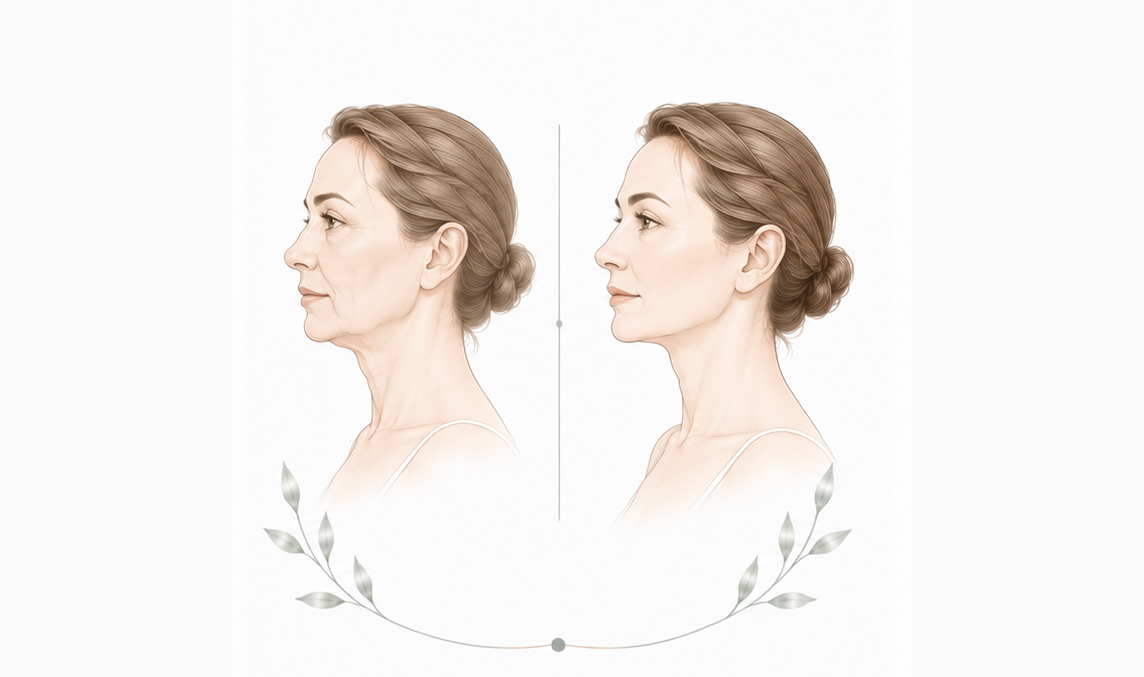
Endoscopic Facelift vs. Traditional Facelift: Differences
The main difference lies in the approach. In an endoscopic mid-face lift, small incisions are made in the temporal region of the scalp, and an endoscope-assisted technique is used, allowing for minimally invasive treatment of the area.
The goal is not to apply excessive tension, but rather to precisely reposition the tissues to achieve a natural rejuvenation, while avoiding any alteration to the patient’s facial identity.
Initial Visit and Personalized Assessment
Every treatment begins with an individualized medical evaluation. During this initial consultation, we’ll listen to your concerns, what you’d like to improve, and your expectations regarding the surgery.
During the visit, Dr. Barret will evaluate your case on an individual basis and explain which options may be right for you. We’ll also discuss the possible limitations of the treatment, the recovery process, and the factors you should be clear about before making a decision.
What happens during the initial assessment?
What treatment options might be appropriate
What results can you reasonably expect?
What the recovery and follow-up process is like
A personalized quote and financing options
How is an endoscopic mid-face lift performed?
The procedure is performed in the operating room and requires a personalized treatment plan. Before surgery, we will assess your facial anatomy, the degree of aging, skin quality, and whether the procedure should be combined with other techniques.
Endoscopic Technique
Endoscopy allows surgeons to work through small incisions and visualize internal structures during the procedure. This approach is used to lift and reposition tissues in the cheekbones (malar region), the upper cheeks, the nasolabial folds, and the area around the eyes.
The scars are hidden within the scalp and, occasionally, inside the mouth.
Treatments That Can Be Combined
An endoscopic mid-face lift may be combined, depending on the medical indication, with other facial rejuvenation or facial contouring procedures such as:
Endoscopic forehead lift
Cervicofacial lift
Blepharoplasty
Facial lipostructure
Bichectomy
Combining procedures is not always necessary. This decision is made during the medical evaluation, based on the patient’s anatomy, goals, and the degree of facial aging.
Recovery, Care, and Results
Recovery from an endoscopic mid-face lift is gradual and depends on each patient, the type of procedure, and whether it is combined with other procedures. During your consultation, we will explain what the postoperative process will be like and what medical follow-up you will need.
Recovery After an Endoscopic Mid-Face Lift
After the procedure, the medical team will provide you with personalized instructions for the first few days and schedule the necessary follow-up visits.
Recovery from a mid-face lift typically takes several weeks, but most patients can resume their daily activities (except for strenuous exercise and sports) after about 10–15 days.
Return to work usually takes between 2 and 3 weeks, although this may vary depending on your individual recovery and the type of work you do.
During recovery, it is important to follow the guidelines provided during your consultation, attend follow-up appointments, and discuss any discomfort or concerns that arise during the process.
When will the final results be visible?
Changes may begin to be noticeable within the first few weeks, but the results should be evaluated gradually, as the tissues subside and the area blends in with the rest of the face and becomes more harmonious.
The first results become visible after 2 or 3 weeks, when the swelling has subsided considerably. However, as with any other facelift procedure, the final assessment of the results should be made after 10–12 months.
It is important not to rush to conclusions and interpret the final result too soon.
The goal is to achieve a natural rejuvenation of the midface, with a gradual improvement in the appearance of the cheekbones and the area around the eyes.
Aftercare Following an Endoscopic Mid-Face Lift
After the procedure, our medical team will provide you with specific guidelines tailored to your case. These recommendations may vary depending on whether the facelift is performed on its own or in combination with other procedures.
Postoperative follow-up allows us to monitor your progress, answer any questions, and adjust the instructions based on each patient’s recovery.
Postoperative care is tailored to the technique used and each patient’s progress.
In general, it includes:
Get plenty of rest and keep your head elevated to reduce swelling.
Eat a soft diet during the first week.
It is essential to maintain good hygiene to prevent infections.
It is very important to take the medication prescribed by your surgeon.
Avoid sports, intense exercise, and strenuous activity.
Undergo Vodder or Indiba® manual lymphatic drainage sessions to help reduce swelling more quickly.
Scars should be protected from the sun.
Expected Benefits
Mid-Face Rejuvenation
It helps improve the appearance of the cheekbones, upper cheeks, nasolabial folds, and the area around the eyes—areas that greatly influence facial expression.
A natural and balanced result
The treatment plan aims to rejuvenate without altering facial identity or creating an artificial appearance.
Minimally Invasive Technique
Endoscopy allows the procedure to be performed through small incisions and with less surgical trauma than a traditional facelift. Thanks to the use of endoscopy, the procedure can be performed using the deep-plane technique through two small incisions in a minimally invasive manner.
Improving One's Self-Image
This technique helps restore facial appearance and self-esteem; patients feel more comfortable with their appearance and regain a more rested look.
Option to Combine Treatments
It can be combined with other facial rejuvenation or facial contouring procedures if deemed appropriate by a medical evaluation.
Risks and Possible Contraindications
Like any surgical procedure, an endoscopic mid-face lift requires a prior medical evaluation, appropriate medical indication, and postoperative follow-up.
Generally, complications may include infections—though these are rare with proper care—mild asymmetries that may require touch-ups, temporary nerve damage in exceptional cases, and visible or abnormal scars.
Unrealistic Expectations
This procedure is not recommended when the patient is seeking excessive change or a result that does not align with their facial anatomy.
Inappropriate facial indication
If aging primarily affects other areas of the face, it may be necessary to consider a different type of facelift or a combination of procedures.
Incompatible medical condition
Before the procedure, your overall medical condition will be assessed to confirm whether the procedure can be performed safely.
Frequently Asked Questions About Mid-Face Lifts
It primarily targets the cheekbones, the upper cheeks, the nasolabial folds, and the area around the eyes—especially the area associated with crow’s feet and the aged appearance of the midface.
It is typically recommended for patients aged 45 and older, although it may also be considered for younger people whose faces appear aged due to other factors.
The goal is not to change the facial expression, but to rejuvenate the midface while preserving the face’s natural appearance. The treatment plan is tailored to each patient.
Yes, it can be performed in conjunction with blepharoplasty when medically indicated. It can also be combined with an endoscopic forehead lift or a cervicofacial lift, buccal fat pad removal, or facial liposculpture.
A mid-face lift focuses on the cheekbones, the upper cheeks, the nasolabial folds, and the area around the eyes. An endoscopic forehead lift addresses the forehead, the area between the eyebrows, and the position of the eyebrows.
The procedure lasts approximately 4 hours, although the duration may vary if it is combined with other procedures.
Yes. We usually recommend a 1-day hospital stay, although in select patients, the procedure can be performed without hospitalization.
A return to work usually occurs within 2 to 3 weeks, depending on the individual’s progress and the type of work.
The endoscopic technique allows the procedure to be performed through small incisions, using a less invasive approach than a traditional facelift.
The mid-face endoscopic facelift is a deep-plane facelift; all the tissues in the area are lifted and repositioned, not just the skin.
The best way to find out is to undergo a medical evaluation. We will determine whether the signs of aging are concentrated in the middle third or whether another procedure should be considered.
Specialist responsible for the treatment
Dr. Joan-Pere Barret
Doctor of Medicine and Surgery · Specialist in Plastic, Aesthetic, and Reconstructive Surgery
License No.: 28191
- Head of the Plastic Surgery and Burns Department at Vall d’Hebron Hospital.
- Director of the Face Transplant Program at Vall d’Hebron University Hospital.
- Plastic Surgeon at Hospital CIMA.
Cost of the surgery
HOW MUCH WILL IT COST ME?
To receive a personalized quote, a preliminary medical evaluation is required. During the consultation, we will explain which treatment is recommended, what results you can expect, and what the recovery process will be like.
FINANCING OPTIONS
If you need to finance your plastic surgery or another cosmetic medical procedure, you can do so easily and conveniently through Tu Medicina Financiada.
You can choose the payment plan that best suits your needs.


Schedule an appointment for an initial evaluation
If you’re thinking about having surgery in Barcelona, the first step is a personalized consultation with a plastic surgery specialist.
During the consultation, you’ll be able to explain what you’d like to improve, ask any questions you may have, and learn which options are best suited to your situation. A personalized treatment plan is essential to achieving the results you desire.

