

Face Transplant
Highly complex reconstructive surgery aimed at restoring essential facial functions
Face transplantation is one of the greatest advances in modern reconstructive surgery. It is a highly specialized procedure that offers an alternative to people with extremely severe facial deformities, when conventional reconstruction techniques can no longer provide sufficient functional and aesthetic recovery.
Although the procedure is known for its media coverage, it remains an exceptional treatment performed only in hospitals with specialized transplant programs and by highly specialized multidisciplinary teams.
On this page:
Important Information
Facial transplants are not performed at Dr. Barret’s private practice. It is a highly complex hospital-based procedure carried out within the public health care system and subject to specific protocols for evaluation, authorization, donation, and transplantation.
The purpose of this page is to provide accurate, evidence-based information to patients and their families who wish to learn in which situations this type of treatment may be considered, understand what the procedure entails, who may benefit from it, and the proper process for requesting an evaluation.
What is a face transplant?
A face transplant is a reconstructive procedure in which severely damaged facial tissues are replaced with tissues from a deceased donor.
Depending on each patient’s needs, the transplant may include skin, subcutaneous fat, facial muscles, nerves, arteries and veins, cartilage, bone, lips, nose, and eyelids.
The primary goal is not only to improve appearance but also to restore essential functions such as breathing, speaking, eating, swallowing, closing the eyes, protecting the cornea, and expressing emotions through facial expressions.
In what cases might a face transplant be recommended?
Most facial injuries can be treated with conventional reconstructive surgery using the patient’s own tissues.
However, there are exceptional situations in which tissue loss is so extensive that standard techniques are unable to restore acceptable function.
Possible indications include:
- Very severe facial trauma.
- Extensive burns.
- Injuries caused by explosions.
- Aftereffects of workplace or traffic accidents.
- Certain very extensive tumor resections.
- Some complex facial malformations or deformities.
Evaluation for a Face Transplant
Who is eligible?
Eligibility for a face transplant depends on numerous factors. There is no single criterion.
Generally, factors such as the severity of the facial deformity, the inability to achieve adequate reconstruction through conventional surgery, good overall health, and the absence of medical conditions that would contraindicate immunosuppression are considered. Psychological stability, the ability to comply with lifelong medical follow-up, and having an adequate family and social support network are also essential.
The selection process is extremely rigorous, as the goal is to ensure that the potential benefits outweigh the risks of the treatment.
How is the evaluation conducted?
The evaluation of a potential candidate can take several months.
It involves specialists from various disciplines, including plastic and reconstructive surgery, anesthesiology, general and thoracic surgery, transplant coordination, infectious diseases, psychiatry and clinical psychology, rehabilitation, specialized nursing, and social work.
Comprehensive medical workups, imaging studies, functional tests, and a detailed psychological evaluation are performed.
Only when the entire team determines that the patient meets the necessary criteria can their inclusion in a transplant program be considered. Prior to inclusion, in accordance with Spain’s laws and regulations governing organ and tissue transplantation, it is necessary to obtain a positive certification from the hospital’s healthcare ethics committee, as well as a final positive assessment from OCATT and ONT.
Dr. Joan-Pere Barret and the facial transplant program
Dr. Joan-Pere Barret is the head of the Plastic Surgery and Burn Unit at Vall d’Hebron University Hospital.
In 2010, he led the team responsible for the world’s first total face transplant, a procedure that set an international benchmark in reconstructive plastic surgery and microsurgery.
His work in this field takes place at Vall d’Hebron University Hospital and within its public organ donation and transplant program, alongside a large multidisciplinary team.
This hospital experience is part of his career in advanced reconstructive surgery and the treatment of highly complex facial conditions.
What is the surgery like?
A face transplant is one of the most complex procedures in modern surgery.
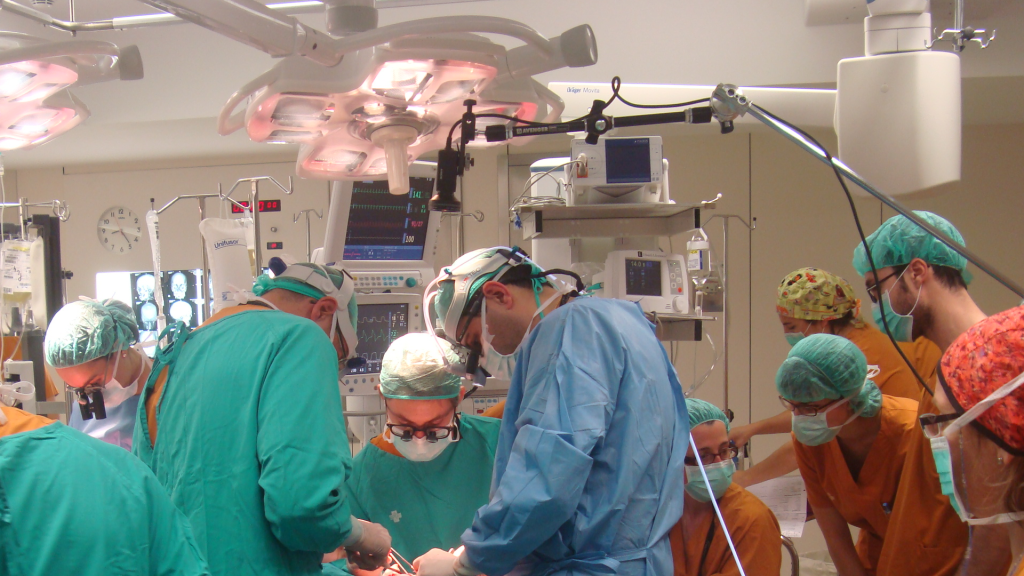
The procedure can last for many hours and requires the simultaneous involvement of numerous professionals.
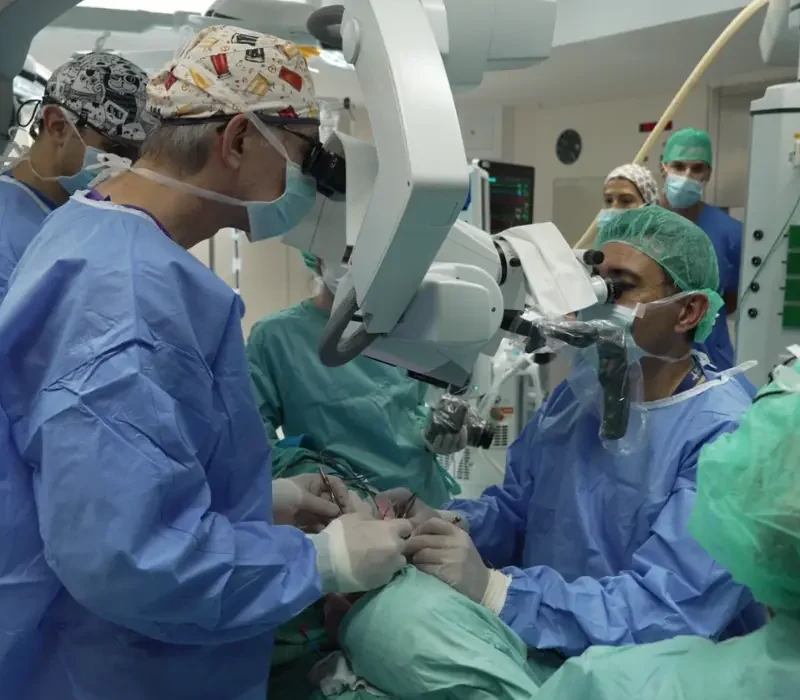
It actually consists of two surgeries: the surgery to harvest facial tissues from the donor and the transplant surgery on the recipient. Both surgeries are highly complex.
During the face transplant surgery, the deformed tissues are removed and facial tissues from a deceased donor are transplanted. Arteries, veins, nerves, muscles, and, when necessary, bone structures are carefully connected with the goal of achieving graft integration and promoting functional recovery.
Each procedure is completely different because it is tailored to the anatomical needs of each patient.
Recovery After Transplantation
After surgery, a long and demanding recovery process begins.
Rehabilitation includes physical therapy, occupational therapy, speech therapy, and very close medical monitoring.
Nerve recovery can take months or even years, as nerves need time to regenerate and regain some of their function.
The degree of recovery varies considerably from patient to patient.
Risks and Outcomes of Facial Transplantation
What are the risks of a face transplant?
Facial transplantation involves significant risks, including death.
The main risk is immune rejection of the graft, which is why all patients must receive lifelong immunosuppressive therapy.
Immunosuppression can increase the risk of infections, kidney failure, high blood pressure, diabetes, certain types of cancer such as lymphomas, chronic rejection, and other complications related to a weakened immune system.
For this reason, ongoing medical follow-up is essential, and strict adherence to treatment is absolutely necessary.
What results can be achieved?
Results obtained in carefully selected patients have shown that face transplantation can significantly improve quality of life.
Many patients are able to regain important functions such as eating more normally, speaking more clearly, breathing better, adequately protecting their eyes, regaining some sensation, and expressing emotions through their facial muscles.
In addition to functional benefits, facial reconstruction can promote social reintegration and improve psychological well-being.
However, it is important to understand that each case is different and that no results can be guaranteed in advance.
Vall d’Hebron University Hospital
Multidisciplinary experience in facial transplantation
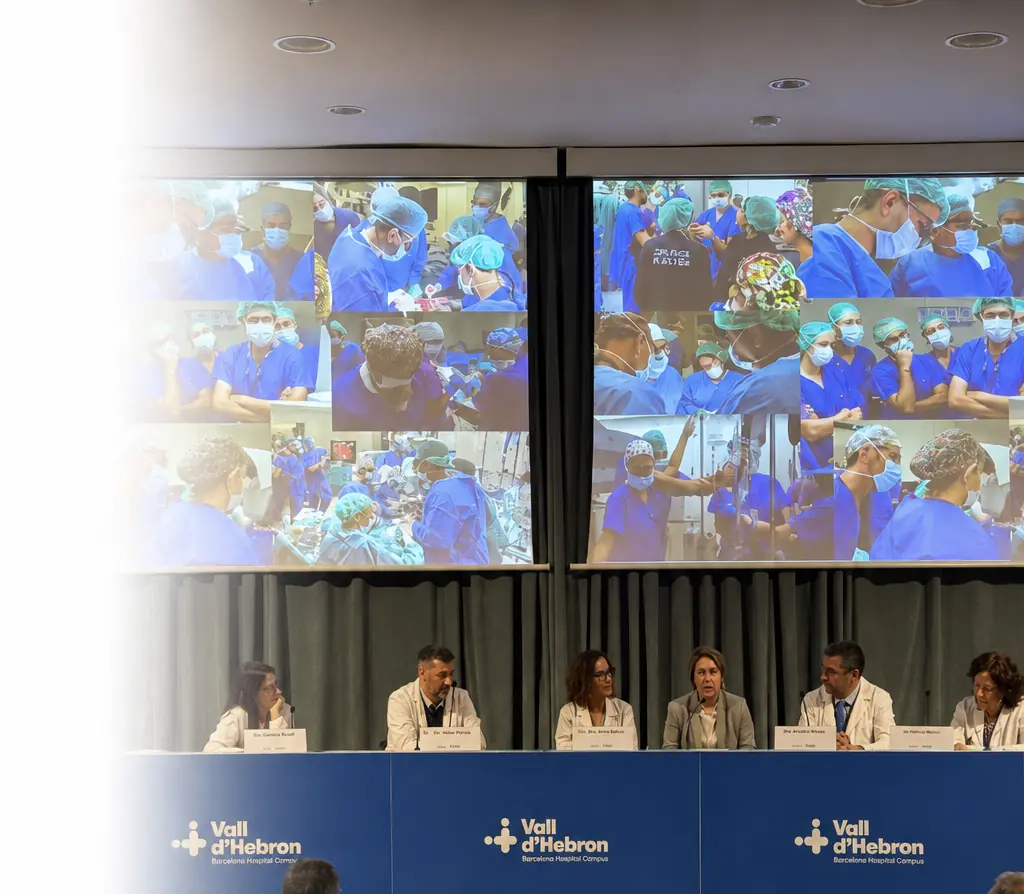
Vall d’Hebron University Hospital has performed three of the six face transplants carried out in Spain. The program brings together the hospital infrastructure, technological resources, and professional teams necessary to perform a procedure of this nature.
Each procedure involves approximately one hundred professionals. Planning may include imaging tests, three-dimensional models, anatomical studies, the design of cutting guides, and the simultaneous coordination of the donation and transplant teams.
The complexity of the process explains why only a very small number of centers worldwide have the capacity and experience to perform facial transplants.
INTERNATIONAL MILESTONE
Facial Transplant at Vall d’Hebron University Hospital
The Vall d’Hebron University Hospital has developed one of the most experienced hospital programs in facial transplantation. Its procedures have contributed to advances in reconstructive surgery and composite tissue transplantation.

2010 — The world's first full-face transplant
In 2010, the team at Vall d’Hebron University Hospital, led by Dr. Joan-Pere Barret, performed the world’s first total face transplant.
The procedure represented a breakthrough in the reconstruction of severe facial injuries and established the use of vascular and nerve microsurgery techniques in complex facial tissue transplantation.
2015 — First facial transplant performed under controlled asystole
In 2015, Vall d’Hebron University Hospital performed its second face transplant. The procedure was the world’s first face transplant from a Maastricht III-type controlled asystole donor.
This milestone expanded our understanding of the donation and transplantation processes applied to vascularized composite tissues.
2026 — First face transplant from a donor who underwent euthanasia
In 2026, Vall d’Hebron University Hospital performed a partial face transplant thanks to a donor’s decision.
The recipient needed to have the central part of her face reconstructed after facial tissue necrosis caused by a bacterial infection.
The case highlighted both the scientific and organizational complexity of the procedure and the human and altruistic dimension of the donation.
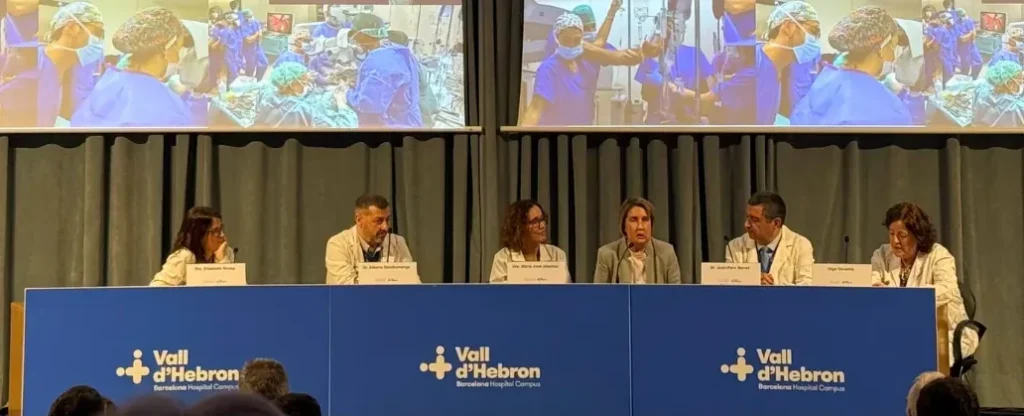
Press Conference – Vall d’Hebron University Hospital
Frequently Asked Questions
No. This is a reconstructive procedure indicated for patients with extremely severe facial deformities that have a very severe impact on function. It is one of the most complex and least common reconstructive procedures in modern surgery.
This treatment is not available at Dr. Barret’s private practice. The evaluation and performance of a facial transplant are part of a public hospital program, subject to medical criteria and an official authorization process.
Yes. The extent depends on the structures involved. It may involve a specific area of the face or a more extensive reconstruction.
Recovery is a lengthy process and varies from case to case. It includes hospital follow-up, immunosuppressive treatment, facial rehabilitation, and psychological support.
No. Nerve connections take time to develop. Mobility and sensation can be gradually restored through nerve regeneration and rehabilitation.
Yes, a transplant requires immunosuppressive therapy and specialized medical follow-up to manage the risk of rejection. The specific treatment plan is determined by the hospital team in charge.
No. Most burns can be treated using conventional reconstructive techniques. Skin grafts are only considered in a very small number of cases.
The evaluation of candidates is the sole responsibility of hospitals that have an authorized face transplant program.
If you have a very severe facial deformity and believe you might benefit from an evaluation, you may request that your case be reviewed by the specialized team at the hospital where such a program is offered.
The evaluation of candidates, the determination of transplant eligibility, and the treatment are always the responsibility of the multidisciplinary team of the Vall d’Hebron University Hospital transplant program. This page is for informational purposes only and does not constitute a means of accessing the program nor does it replace an individualized medical evaluation.