

Breast Lift in Barcelona
Mastopexy, or breast lift, to reshape sagging breasts with a personalized approach.
A breast lift, also known as a mastopexy, is a surgical procedure designed to lift and reshape a breast that has lost firmness, position, or shape over time.
Over the years, pregnancy, breastfeeding, weight fluctuations, and the force of gravity can cause the skin to lose elasticity and the breasts to sag. In these cases, mastopexy allows the breasts to be repositioned and their shape improved, always tailoring the procedure to each patient’s anatomy and expectations.

- + 25 years of experience
- Specialist Plastic and Reconstructive Surgery
- Inquiry 600 Diagonal Ave., Barcelona
- Personalized Personalized and attentive service
On this page:
Please note
DURATION
2–4 hours
ANESTHESIA
Deep or General Sedation
INCOME
1 night
OFF TO WORK
2–3 weeks
Who is a good candidate for a breast lift?
A breast lift may be recommended for women who notice that their breasts have sagged, appear empty, or have lost firmness, especially after pregnancy, breastfeeding, weight fluctuations, or due to the natural aging of the tissues over time.
Not all patients require the same type of mastopexy. Some seek to lift their breasts while preserving their volume; others, in addition to lifting them, need to restore volume or improve their shape using implants or their own fat. That is why a medical evaluation is key to developing a realistic and safe treatment plan.
It may be indicated in cases such as:
- Sagging breasts or loss of firmness.
- Loss of shape after pregnancy or breastfeeding.
- Changes in the breasts following significant weight fluctuations.
- Areolas or nipples positioned lower than desired.
- Breasts that appear hollow at the top.
- Desire to improve breast shape without necessarily seeking an increase in size.
- Loss of volume associated with sagging breasts, in which case a combination with implants or lipofilling may be considered.
- Breast asymmetries that require individual evaluation.

Who is a good candidate?
A good candidate for a mastopexy is a patient in good overall health who has visible breast sagging and realistic expectations about what the surgery can achieve.
It is also important to understand that a breast lift improves the position and shape of the breast but does not halt the body’s natural changes. Aging, future pregnancies, breastfeeding, or further weight fluctuations can affect the long-term outcome.
Before recommending the procedure, we will assess skin quality, breast volume, the position of the nipple-areola complex, the degree of sagging, and the possible need to combine the lift with other procedures.
“The goal is not just to increase volume, but to achieve a proportionate, harmonious chest that is tailored to each patient’s anatomy.”
What Is a Mastopexy?
A breast lift is a surgical procedure that lifts and reshapes sagging breasts by repositioning the breast tissue and adjusting excess skin. The goal is to improve the shape, position, and proportions of the breasts while respecting each patient’s anatomy.
During the planning phase, we assess whether the patient has sufficient breast volume or whether, in addition to a breast lift, a complementary technique should be considered to improve projection or restore lost volume.
Natural Breast Lift: Shape, Proportion, and Harmony
The goal of a breast lift is not to create a “standard” breast, but to improve the position and shape of the breast in a way that is proportionate to each patient’s body.
A properly indicated mastopexy should aim for balance, naturalness, and bodily harmony, avoiding excessive changes or unrealistic expectations.
To achieve a natural-looking result, we consider several factors:
- The position of the breasts.
- The quality and elasticity of the skin.
- Existing breast volume.
- The shape of the chest.
- The position of the areola and nipple.
- Symmetry between both breasts.
- The desire to maintain or restore breast volume.
- The overall proportion with the rest of the body.
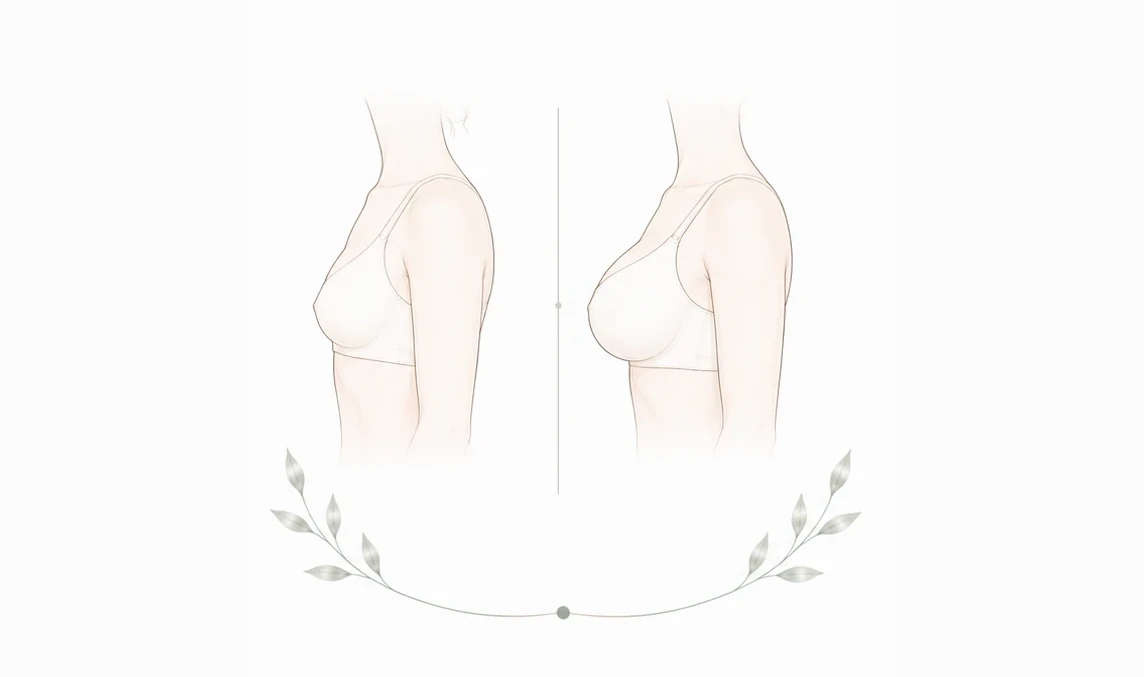
Mastopexy, Breast Augmentation, and Breast Reduction: Differences
A mastopexy, or breast lift, focuses on lifting and reshaping sagging breasts. Its primary goal is not to increase or decrease breast size, but to improve the position and shape of the breasts.
Breast augmentation is recommended when the patient wishes to increase breast volume or restore lost volume. In some cases, it can be combined with a mastopexy if sagging is present in addition to a lack of volume.
Breast reduction, on the other hand, aims to reduce the size of excessively large breasts, making them lighter and more proportionate. It may also include a lift, since reducing the volume reshapes the position of the breast.
During your consultation, we will explain which option best suits your anatomy: mastopexy alone, mastopexy with implants, mastopexy with lipofilling, or, in specific cases, breast reduction.
Initial Visit and Personalized Assessment
Every treatment begins with an individualized medical evaluation. During this initial consultation, we’ll listen to your concerns, what you’d like to improve, and your expectations regarding the surgery.
During the visit, Dr. Barret will evaluate your case on an individual basis and explain which options may be right for you. We’ll also discuss the possible limitations of the treatment, the recovery process, and the factors you should be clear about before making a decision.
What happens during the initial assessment?
What treatment options might be appropriate
What results can you reasonably expect?
What the recovery and follow-up process is like
A personalized quote and financing options
How is a breast lift performed?
A mastopexy is planned on an individual basis depending on the degree of sagging, the amount of excess skin, breast volume, and the position of the areola and nipple.
Generally speaking, the procedure reshapes the breast, removes excess skin when necessary, and reposition the breast to a higher position. The location of the areola is also adjusted to achieve a more harmonious contour.
The specific procedure and technique will depend on each individual case and will be explained during a pre-surgery consultation.
Breast Lift Without Implants
A breast lift without implants may be appropriate when the patient retains sufficient breast volume and the primary goal is to lift and reshape the breast, not to increase its size.
In these cases, the surgeon works with the patient’s own breast tissue to improve the shape and position. This is an option that may be suitable for patients who want a natural-looking result and are not seeking additional volume.
Breast lift with implants
When the breasts are sagging and have also lost volume, a mastopexy with implants may be considered. This combination allows for breast lifting while also adding volume and projection.
Not all patients need implants. The decision will depend on the examination, the amount of available breast tissue, and the desired outcome.
Breast lift with autologous fat or lipofilling
In some cases, the use of the patient’s own fat may be considered to complement a breast lift. This option can help improve volume in specific areas, provided there is a medical indication and sufficient donor tissue.
Lipofilling is not a substitute for all breast augmentation options, nor is it suitable for every case. It will be evaluated on a case-by-case basis during the consultation.
Lipofilling is not always a substitute for implants. It is an option that must be evaluated on a case-by-case basis, depending on the patient’s anatomy, expectations, and the desired volume.
Surgical techniques and scar placement
There are different techniques for performing a mastopexy. The choice of technique will depend on the degree of sagging (ptosis), changes in volume, anatomical characteristics, and each patient’s expectations:
Periareolar incision: Around the areola. Used in mild cases.
Vertical incision or Lejour technique: Runs around the areola and descends vertically toward the inframammary fold (in a “lollipop” shape).
“Inverted T” incision: Includes the previous incisions plus a horizontal incision in the inframammary fold; indicated for severe ptosis.
Your surgeon will explain which technique is best for you to achieve natural and safe results.
The 3D simulation with Crisalix helps us evaluate different options for volume and proportion before surgery. During the consultation, we’ll be able to visualize an approximation of the possible outcome and discuss which alternatives best suit your anatomy.
This tool does not replace a medical evaluation or guarantee an exact result, but it can help you better understand the possibilities of breast augmentation and make a more informed decision.
Recovery, Care, and Results
Recovery from a mastopexy is gradual and requires medical follow-up. Each patient heals differently, so post-operative instructions must be tailored to the type of procedure performed and the tissues’ response.
During the first few weeks, it is common for the breasts to be swollen, and the results will continue to change as the tissues settle. Therefore, the results should be evaluated patiently and always during scheduled follow-up visits.
Recovery After a Mastopexy
After a breast lift, the medical team will provide you with guidelines regarding rest, hygiene, medication, follow-up visits, and a gradual return to your normal activities.
Recovery will depend on whether the mastopexy was performed alone or in combination with implants or lipofilling. Your type of work, level of physical activity, and individual healing process will also play a role.
When will the final results be available?
The breasts begin to take on a new shape right from the start, appearing higher, firmer, and with a more defined contour, but the results should not be evaluated immediately. Swelling, healing, and tissue adaptation take time.
As the weeks go by, the shape stabilizes and the breasts take on a more settled appearance. During your follow-up visit, we’ll explain what progress you can expect based on the technique used in your case.
Following all medical instructions and attending your scheduled follow-up appointments are key to a successful recovery.

Post-Breast Lift Care
Postoperative care is an important part of the process. Specific recommendations will be tailored to your individual needs, but in general, it is important to:
- Follow the instructions for medication and aftercare.
- Avoid strenuous physical activity and sports for at least 3 to 4 weeks.
- Wear a post-surgical bra.
- Do not raise your arms above shoulder level.
- Protect the scars by following the medical team’s guidelines.
- Maintain realistic expectations throughout the recovery process.
- Consult your doctor about any changes or discomfort that cause concern.
Expected Benefits
A breast lift can improve the shape, position, and proportions of the breasts when they have sagged or lost firmness. The expected results will depend on the patient’s initial anatomy, the technique used, and the patient’s individual healing process.
Improving Breast Position and Firmness
A mastopexy lifts a sagging breast and repositions it in a more proportionate position.
Breast Reshaping
Surgery can improve the shape of the breasts when they have lost firmness or appear hollow or saggy.
Restoring Body Harmony
By improving the position and proportions of the breasts, many patients hope to feel more comfortable with their figure and when wearing certain types of clothing.
Tailor the treatment to each patient's volume
The lift can be performed on its own or, when indicated, combined with implants or the patient’s own fat if there is a loss of volume.
Risks and Possible Contraindications
A breast lift is a surgical procedure, and like any surgery, it requires a careful medical evaluation, individualized planning, and postoperative follow-up.
Before recommending treatment, we will assess your overall health, medical history, skin quality, degree of breast sagging, and your expectations. We will also explain the limitations of the procedure and the potential general risks associated with surgery.
In general, the potential risks include infection, bruising or bleeding, hypertrophic scars or keloids, temporary or permanent changes in nipple sensation, breast asymmetry, and problems with implants in cases of mastopexy with implants.
Result Different Than Expected
Even with careful planning, healing, skin quality, and individual tissue response can influence the final result.
Contraindications or the Need to Postpone Surgery
In some cases, it may be advisable to postpone the procedure, for example, if there is a medical condition that increases surgical risk, active breast disease, breastfeeding, unrealistic expectations, future pregnancies, or significant physical changes expected in the short term.
Frequently Asked Questions About Breast Lifts
These are different ways of referring to the same procedure: a surgical procedure designed to lift and reshape sagging breasts.
Not necessarily. A mastopexy lifts and reshapes the breasts, but it does not always increase their volume. If there is also a loss of volume, it may be worth considering combining the procedure with implants or autologous fat.
Yes, in some cases. If the patient retains sufficient breast volume, a breast lift can be performed without implants. The decision depends on the medical evaluation.
It may be considered when, in addition to sagging, there is a loss of volume or a lack of projection. During your consultation, we will determine whether implants are necessary or if there is a more appropriate alternative.
Yes. All breast lifts involve scarring, although the appearance of the scars depends on the technique used. During your consultation, we’ll explain what type of scar is most likely in your case.
It may be recommended when the breasts have lost firmness, shape, or position after pregnancy or breastfeeding. The appropriate timing for surgery should be determined on a case-by-case basis.
The results may be long-lasting, but the breasts will continue to change over time. Aging, future pregnancies, breastfeeding, or weight fluctuations can alter the shape of the breasts.
It may affect your ability to breastfeed, depending on the type of procedure and the amount of tissue removed, so you should discuss this with your surgeon before undergoing surgery.
A mastopexy lifts and reshapes sagging breasts. A breast reduction reduces the size of large, heavy breasts, although it may also include a lift as part of the reshaping process.
It is advisable to schedule a consultation if you notice that your breasts are sagging, empty, or asymmetrical, or if you are unsure whether you need a breast lift alone, a breast lift with implants, lipofilling, or a breast reduction.
The cost of a breast lift depends on the complexity of the case, the technique required, and whether it is performed on its own or in combination with implants or autologous fat.
To provide you with a personalized quote, we need to conduct a medical evaluation, assess your anatomy, and determine which procedure is best suited to your goals.
Specialist responsible for the treatment
Dr. Joan-Pere Barret
Doctor of Medicine and Surgery · Specialist in Plastic, Aesthetic, and Reconstructive Surgery
License No.: 28191
- Head of the Plastic Surgery and Burns Department at Vall d’Hebron Hospital.
- Director of the Face Transplant Program at Vall d’Hebron University Hospital.
- Plastic Surgeon at Hospital CIMA.
Cost of the surgery
HOW MUCH WILL A BREAST LIFT COST ME?
To receive a personalized quote, a preliminary medical evaluation is required. During the consultation, we will explain which treatment is recommended, what results you can expect, and what the recovery process will be like.
FINANCING OPTIONS
If you need to finance your plastic surgery or another cosmetic medical procedure, you can do so easily and conveniently through Tu Medicina Financiada.
You can choose the payment plan that best suits your needs.


Schedule an appointment for an initial evaluation
If you’re thinking about having surgery in Barcelona, the first step is a personalized consultation with a plastic surgery specialist.
During the consultation, you’ll be able to explain what you’d like to improve, ask any questions you may have, and learn which options are best suited to your situation. A personalized treatment plan is essential to achieving the results you desire.

