
Ear Surgery in Barcelona
Surgery to correct protruding, hooded, or floppy ears, as well as asymmetrical ears, to achieve greater facial harmony with natural-looking results.
Otoplasty corrects abnormalities of the outer ear, whether congenital or related to its development. It focuses on modifying the structure of the ear to achieve a more harmonious appearance with the face. This procedure is particularly recommended for people who feel self-conscious about the shape, position, or prominence of their ears.
The goal is not to change facial expression or create artificial ears, but rather to reposition or reshape them so they blend better with the rest of the face. Each case requires an individual assessment, because not all ears have the same degree of prominence or require the same correction.

- + 25 years of experience
- Specialist Plastic and Reconstructive Surgery
- Inquiry 600 Diagonal Ave., Barcelona
- Personalized Personalized and attentive service
On this page:
Please note
DURATION
1–2 hours
ANESTHESIA
Local Anesthesia or General Anesthesia
INCOME
No
INITIAL RECORD
Progressive
OFF TO WORK
1–2 weeks
VISIBLE RESOLUTION
Improvement from the very first days
FINAL RESOLUTION
To be assessed at 6 months
Who is a good candidate for otoplasty?
Otoplasty is recommended for people with prominent ears, hooded ears, or protruding ears who wish to improve the proportion between their ears and the rest of their face.
It may also be considered when there is an abnormality of the auricle due to a congenital malformation or as a result of trauma or previous surgeries.
This procedure not only improves aesthetic appearance but can also boost self-esteem and confidence in those who choose to undergo it.
Recommended for cases such as:
- Prominent ears or ears that are too far apart from the head.
- Hooked or floppy ears.
- Visible abnormalities of the outer ear.
- Congenital or traumatic deformities of the outer ear.
- Asymmetry between the two ears.
- Aesthetic discomfort that has persisted for years.
- Desire to harmonize the ears with the overall facial appearance.
- Children or adults who feel self-conscious about the appearance of their ears.

Who is a good candidate?
A good candidate for otoplasty is someone who has a cosmetic issue with their ears, is in good health, and has realistic expectations about the outcome.
In pediatric patients, it is important to assess not only the anatomy but also the child’s emotional state. It is helpful if the child expresses discomfort with their ears, as this can help them better understand the process and cooperate during recovery.
Before surgery, the patient or their family must understand the procedure, the recovery process, postoperative care, and the limitations of the surgery.
A person with a deformity of the outer ear caused by a congenital malformation, trauma, or previous poorly performed surgery in the area is also a good candidate for reconstructive otoplasty.
“The goal is not to hide the ears or create an artificial shape, but to correct their position or structure so that they blend naturally with the face.”
What Is Otoplasty?
Cosmetic otoplasty is a surgical procedure that corrects developmental deformities such as the shape, position, or prominence of the outer ear. In cases of prominent ears, the procedure is performed to bring the ears closer to the head or to improve their structure when they are too visible from the front or from behind.
Reconstructive otoplasty is the surgical procedure indicated to correct congenital malformations or deformities resulting from trauma or the aftereffects of previous surgeries.
The planning of the surgery depends on the cause of the deformity and the anatomy of each patient:
- Shape of the outer ear
- Shape of the outer edge of the ear (helix)
- Definition or shape of the inner ridge (anthelix)
- Depth of the auricular concha
- Size of the earlobe
- Symmetry between both sides or the relationship of the ears to the rest of the face
- Congenital or trauma-related malformations.
Natural Otoplasty: Balance and Proportion
A well-planned otoplasty should aim for a proportionate correction. The goal is not for the ears to be excessively close to the head or to lose their natural appearance, but rather for them to maintain a harmonious shape that is consistent with the face.
The evaluation analyzes aspects such as: degree of prominence, symmetry between both ears, shape of the auricular cartilage, proportion of the ears relative to the face, the patient’s age, aesthetic expectations, skin type and healing potential, and the reasons for the surgery—whether aesthetic or reconstructive.
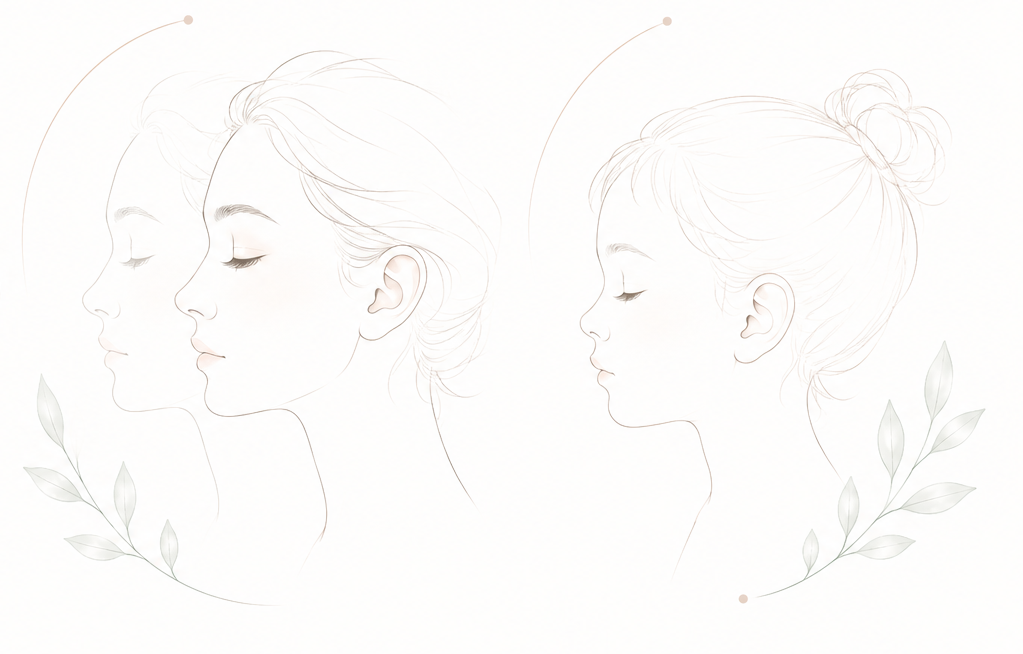
Ear Surgery in Adults and Children
In adults, otoplasty is usually performed to address a cosmetic concern that has persisted for years. Many patients wish to correct ears that have limited how they style their hair, pose for photos, or show their profile.
In children, the decision to proceed must be made with particular caution. Surgery can help when prominent ears cause distress, teasing, or insecurity, but it is important for the child to be involved in the decision and to understand, to the best of their ability given their age, why the procedure is being considered.
Initial Visit and Personalized Assessment
Every treatment begins with an individualized medical evaluation. During this initial consultation, we’ll listen to your concerns, what you’d like to improve, and your expectations regarding the surgery.
During the visit, Dr. Barret will evaluate your case on an individual basis and explain which options may be right for you. We’ll also discuss the possible limitations of the treatment, the recovery process, and the factors you should be clear about before making a decision.
What happens during the initial assessment?
What treatment options might be appropriate
What results can you reasonably expect?
What the recovery and follow-up process is like
A personalized quote and financing options
How is an otoplasty performed?
This is the most common indication. The procedure is performed when the ears are set farther apart from the head than usual, creating a “protruding ears” appearance.
The goal is to reposition the ears in a balanced way, avoiding an excessive or unnatural correction.
Correction of Protruding Ears
In closed rhinoplasty, the incisions are made inside the nostrils. This means there are no visible scars on the outside of the nose.
This technique may be appropriate in certain cases, especially when the necessary modifications do not require extensive exposure of the nasal structures. Its main advantage is that it avoids an external scar and may promote a slightly faster recovery in selected patients.
However, not all noses can be treated with closed rhinoplasty. The choice of technique depends on the anatomy, the goals of the surgery, and the complexity of the case.
Ear Reshaping
In some cases, the prominence depends not only on the position but also on the shape of the ear cartilage. The treatment plan may include reshaping certain areas to achieve a more harmonious shape.
The specific technique is determined after evaluating the structure of each ear.
Correction of Asymmetries
It is common for one ear to be different from the other. Otoplasty can improve symmetry, although it is important to note that the goal is not always to achieve absolute symmetry, but rather a more balanced and natural appearance.
Pediatric Otoplasty
When considering this procedure for children, the decision must be made carefully. In addition to the medical indication, the child’s level of discomfort, their ability to cooperate, and family support during the postoperative period are all taken into account.
Reconstructive Otoplasty
In patients with deformities caused by congenital malformations, trauma, or complications from previous surgeries, the procedure may be more complex. These deformities must be evaluated thoroughly and on a case-by-case basis.
Sometimes surgery involves more than just correcting the shape; it may also be necessary to use cartilage grafts from the other ear or from a rib to reconstruct the damaged area.
Recovery, Care, and Results
Recovery After Otoplasty
Recovery from otoplasty is usually quick. During the first few days, you may experience swelling, a feeling of tightness, local discomfort, or tenderness in the treated area.
It is recommended to wear a special elastic band at night for a few weeks to maintain the new shape.
Return to work usually takes between 1 and 2 weeks, depending on the individual’s recovery and the type of work.
For children, returning to school should be determined on a case-by-case basis according to medical advice.
It is recommended to avoid sports for 1 month and to avoid contact sports for 3 months to reduce the risk of blows.
When will the final results be available?
The change is noticeable from the very first days, although the initial swelling may make it difficult to fully assess the results at first.
As the weeks go by, the tissues settle, and the shape of the ear blends in more naturally. The healing process may vary depending on each patient and their individual healing response.
As with any surgery, it is important to follow the surgeon’s medical instructions, take the prescribed medication and follow the prescribed aftercare regimen, and attend all scheduled follow-up appointments.

Post-Otoplasty Care
After otoplasty, each patient receives personalized instructions.
In general, the following may be necessary:
- Wear a special elastic band at night for a few weeks.
- Avoid blows or direct pressure on the area.
- Sleep according to your doctor’s instructions.
- Do not participate in sports for 1 month.
- Avoid contact sports for 3 months.
Expected Benefits of Otoplasty
A properly indicated otoplasty can improve facial harmony and a person’s self-image. The goal is to achieve a natural, proportionate correction tailored to each patient.
Improve facial symmetry and harmony.
Otoplasty can help the ears blend in better with the rest of the face, especially when they are very prominent or draw too much attention.
Correcting protruding ears.
This procedure treats prominent, hooded, or protruding ears, one of the most common indications for this surgery.
Achieving a natural look
The planning aims to avoid an artificial or overly corrected appearance. The goal is for the ears to maintain a normal, proportionate shape that is consistent with the face.
Correction of Congenital or Acquired Deformities
Reconstructive otoplasty is indicated to correct congenital (present at birth) or acquired (due to trauma or previous surgeries) deformities.
Boosting Self-Esteem and Self-Confidence
Prominent or protruding ears are a very common cause of self-consciousness and teasing. After undergoing the procedure, your self-esteem and self-confidence may improve.
Risks and Possible Contraindications
Although otoplasty is a common procedure when properly indicated, it is still a surgical procedure. That is why it is important to evaluate each case individually and understand its potential risks.
Bleeding or bruising.
As with any surgical procedure, bleeding, bruising, or changes in the color and sensitivity of the treated area may occur.
Infection
Although ear surgery is performed in a sterile operating room, there is always a risk of infection in the surgical area. Therefore, it is very important to follow your doctor’s instructions regarding hygiene in the area and to take the prescribed medication.
Asymmetry or a result different from what was expected
Even with careful planning, each patient’s healing process and response can affect the final result. Some degree of asymmetry may remain, as the ears are rarely identical before surgery.
Need for Follow-up
In some cases, it may be necessary to consider additional correction if the condition recurs.
Frequently Asked Questions About Otoplasty
Otoplasty is ear surgery. It corrects abnormalities of the outer ear, particularly protruding ears, hooded ears, and floppy ears.
Yes. It’s one of the most common indications for it.
The estimated duration is 1–2 hours, although each case should be evaluated on an individual basis.
It can be performed under general anesthesia or local anesthesia with sedation, depending on the specific case, the patient’s age, and the medical evaluation.
No. If the patient wishes, he or she may stay overnight.
During the first few days, you may experience mild discomfort, which can be managed with the prescribed pain relievers.
The return to work usually takes between 1 and 2 weeks, depending on the patient’s progress and the type of work.
The incisions are made behind the ear, so they are hidden and barely visible.
In children, it is best to wait until the child expresses discomfort with their ears. This helps them better understand the reason for the surgery and cooperate during the postoperative period.
The goal is to achieve a balanced and natural correction. The aim is not to make the ears lie too close to the head or to alter their natural shape.
Yes, reconstructive otoplasty is indicated to correct congenital deformities or those acquired due to trauma or previous surgeries.
It is a more complex procedure that sometimes requires multiple surgeries to achieve the best possible result.
No, the surgery does not interfere with hearing.
The price depends on the medical evaluation and the recommended surgical plan. To receive a personalized estimate, you’ll need to schedule an initial consultation.
Specialist responsible for the treatment
Dr. Joan-Pere Barret
Doctor of Medicine and Surgery · Specialist in Plastic, Aesthetic, and Reconstructive Surgery
License No.: 28191
- Head of the Plastic Surgery and Burns Department at Vall d’Hebron Hospital.
- Director of the Face Transplant Program at Vall d’Hebron University Hospital.
- Plastic Surgeon at Hospital CIMA.
Cost of the surgery
HOW MUCH WILL OTOPLASTY COST ME?
The cost of an otoplasty depends on each patient’s anatomy, the complexity of the case, the type of anesthesia, and the necessary surgical planning.
To receive a personalized quote, a preliminary medical evaluation is required. During the consultation, we will explain which treatment is recommended, what results you can expect, and what the recovery process will be like.
FINANCING OPTIONS
If you need to finance your plastic surgery or another cosmetic medical procedure, you can do so easily and conveniently through Tu Medicina Financiada.
You can choose the payment plan that best suits your needs.





Schedule an appointment for an initial evaluation
If you’re thinking about having surgery in Barcelona, the first step is a personalized consultation with a plastic surgery specialist.
During the consultation, you’ll be able to explain what you’d like to improve, ask any questions you may have, and learn which options are best suited to your situation. A personalized treatment plan is essential to achieving the results you desire.

